 VisualCubing
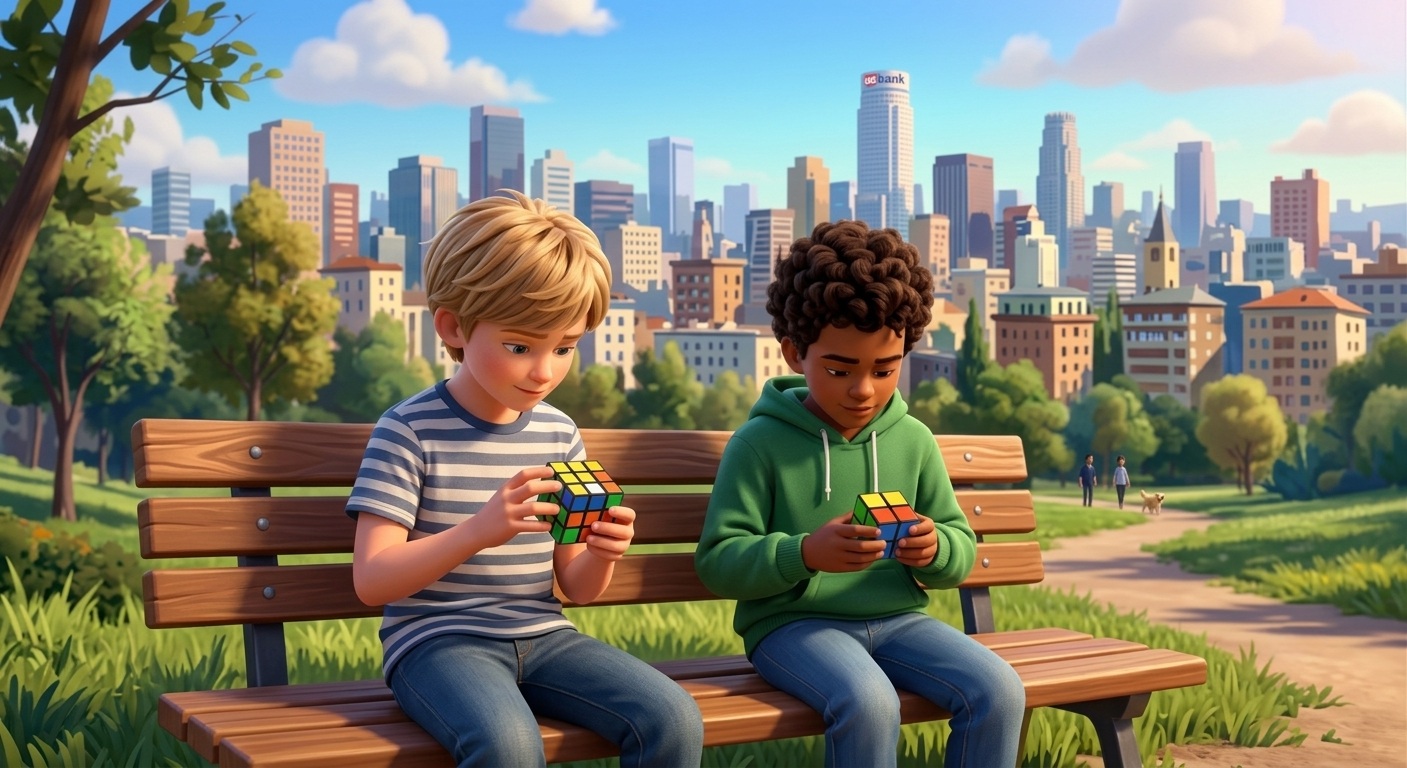
Okay, you already know solving the cube is addictive (if not, start here). But there's a question that deserves a serious answer, no fluff: what exactly are you training when you spend half an hour turning this thing on a random Tuesday? More than it looks like. And no, it's not "intelligence" in the abstract — it's a lot more specific than that.
Concentration: the world shrinks to six faces
There's a reason why, while you're solving, you stop listening to whatever people are telling you (sorry, family). The cube pulls you into a state of total focus very close to what mindfulness techniques aim for: your attention narrows until that's all that exists, right in front of your hands. No notifications, no twenty open tabs. Just you and a problem with a guaranteed solution — which is already more than most of your day offers you.
Patience, without even noticing
Nobody sits down to "practice patience" on purpose — it sounds like homework. But solving the cube imposes it without asking permission: you're going to fail the same formula fifteen times before you nail it once. You're going to accidentally undo something you'd spent ten minutes building. And you're going to try again, because the alternative — leaving it half-done — is worse than sticking it out a bit longer. That tolerance for frustration you build cube after cube has a habit of sneaking into things that have nothing to do with colored faces.
Self-improvement: the person you're competing against is yourself, yesterday
This is probably the most addictive part of all. The cube gives you a number — your time — and that number doesn't lie or compare you to anyone but yourself from a week ago. Going from three minutes to two. From two to one. Every improvement is yours, measurable, undeniable. If you want to put a real timer on this, with official WCA-style averages, we've built one for exactly that.
Spatial awareness: rotating the cube in your head before you touch it
When you're starting out, you turn a face and have to look carefully to see what happened. Over time, you start anticipating it: you turn, and you already know, before your eyes even finish processing it, where each piece ended up. That's spatial awareness training itself in real time — the same skill that later makes you more comfortable reading a map, parking in a tight spot, or assembling furniture without the instructions. There are studies that directly link this ability to the abstract reasoning that technical degrees demand. The cube doesn't know it, but it's training you for other things too.
"Lookahead": the art of knowing where your piece is before you look at it
This is about as close to a superpower as you'll get from a 5-euro toy. In the speedcubing community it has its own name — lookahead — and it even has named stages: first you spot where the piece you need is (Spotting), then you learn to track it with your eyes while finishing the previous step (Tracking), and eventually you simply know it without looking for it (Knowing).
Put another way: your brain learns to keep track of something it isn't looking at directly. It's pure spatial working memory, trained without you noticing — and it's probably the skill that separates someone who "solves the cube" from someone who "solves the cube fast, without thinking about it."
If you're reading this thinking about your kid
(We know part of who's reading this isn't looking for themselves. This one's for you.)
The cube has an advantage few "benefits for kids" can claim: it doesn't need selling. A kid who solves their first face alone, with nobody convincing them, already wants the second one on their own. That doesn't happen with vegetables.
What actually sticks: better concentration (the same kind needed for homework later), frustration tolerance trained the most honest way possible — failing over and over until it clicks — and fine motor skills, because fingers learn too. And there's something almost like a bonus: the real confidence of having achieved something hard on their own, without an adult's help or a screen playing for them.
About age: there's no need to wait until they're "old enough for this." The current world record, 2.76 seconds, is held by a nine-year-old. You don't need to get anywhere close to that — but it makes clear that age isn't the barrier it seems to be.
And yes: it's one of the few modern hobbies for a kid that doesn't come with a built-in screen. These days, that's almost a benefit on its own.