 VisualCubing
Choose your level, your cube, and start solving
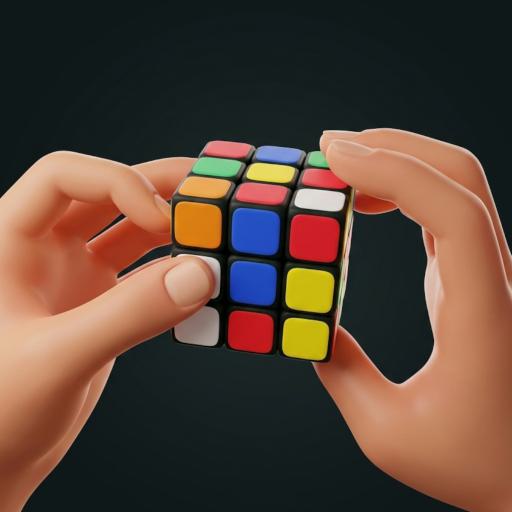
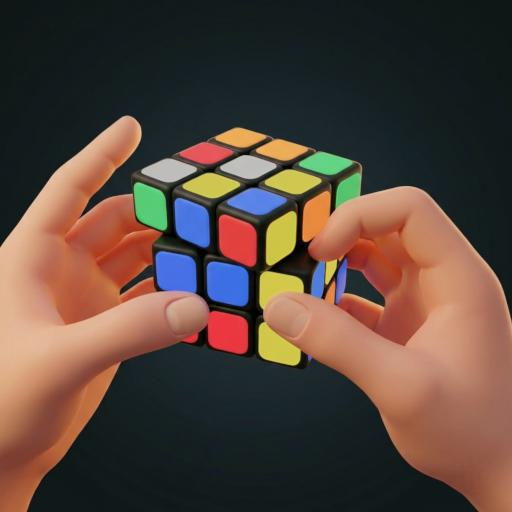
The original Rubik's Cube: 43 quintillion combinations and a single solution. It sounds like you'd have to be a genius, and it's exactly the opposite — nobody solves a cube by thinking: you learn a method, you repeat it, and it starts coming out easily. Here are three, ordered from fewest to most formulas, and in all of them you can turn the 3D cube yourself while you look at it and compare it with your own.
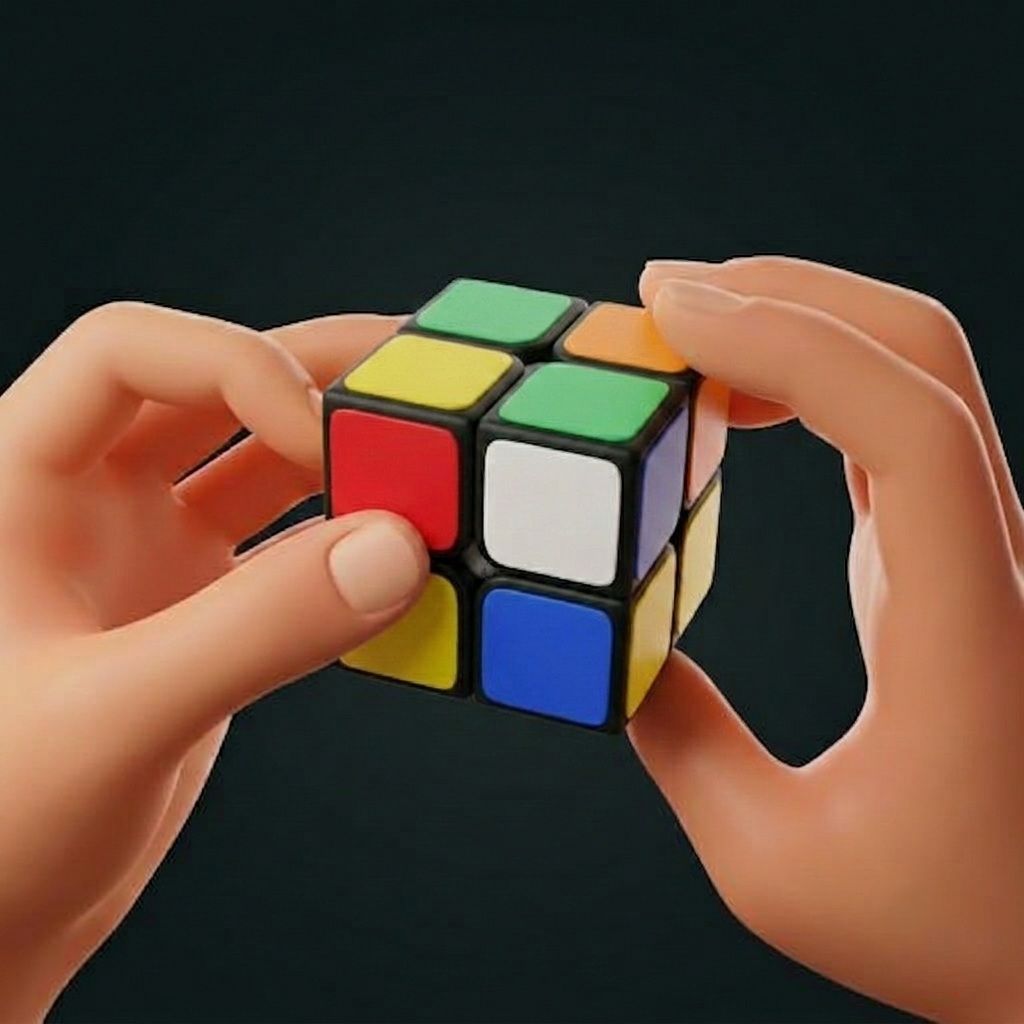
The best-known cube after the 3×3, and the one almost everyone underestimates: it looks like a toy, but it has 3.6 million combinations. It has no centers and no edges, just eight corners — so everything you've learned on the 3×3 works here. It's also where the jump shows up soonest: you start solving it in a minute and end up going under five seconds.
The first cube that breaks the rules you already knew: the centers aren't fixed and each edge is split in two, so it can end up in positions that are literally impossible on a 3×3. The good news is that you don't have to learn a whole new method — with a few simple steps it reduces to a 3×3 and you finish it with what you already know. Only two new cases show up, the parities, and that's exactly where a lot of people give up: here you have them explained one by one, with the 3D cube in front of you.
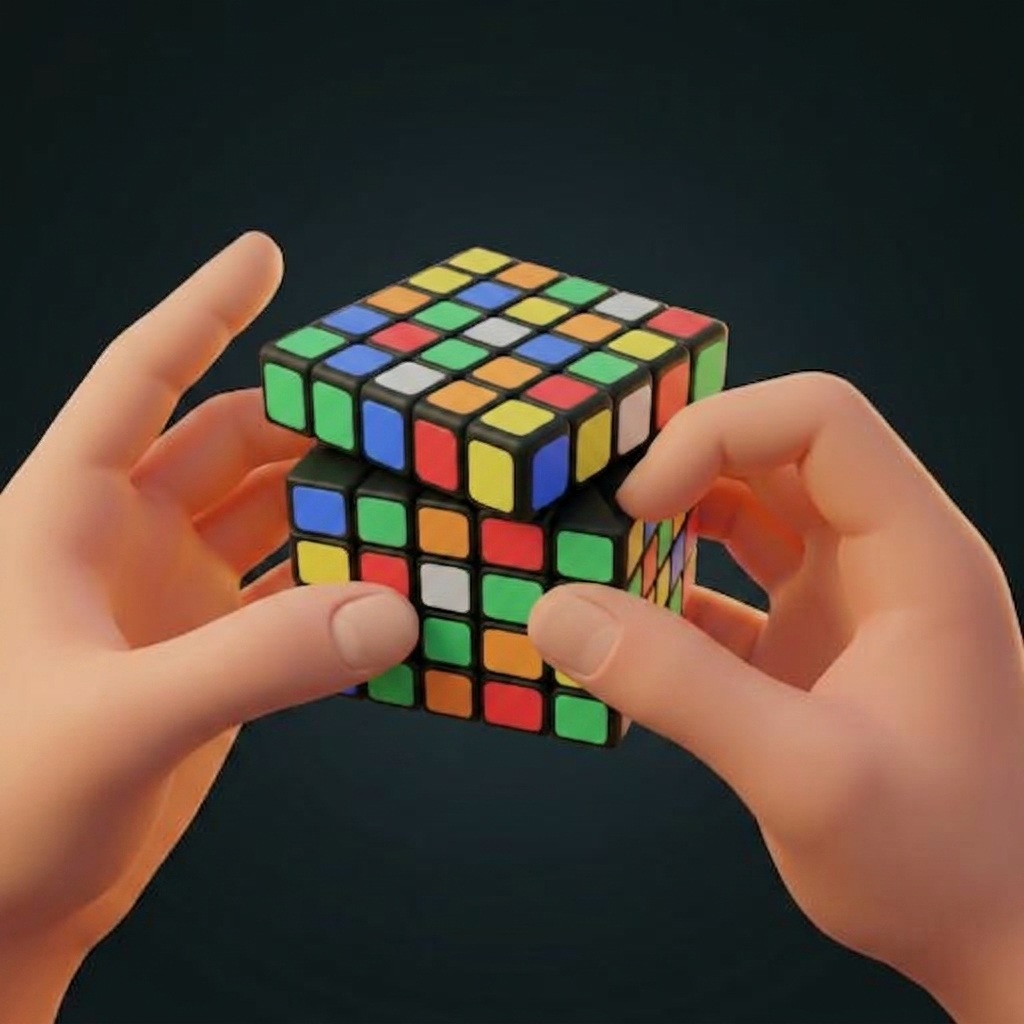
The second big cube, and it starts with good news: here each face's centre is fixed again, just like on a 3×3 — exactly what the 4×4 was missing. What you do have to build is what surrounds it: each centre has eight loose pieces, and every edge splits into three. It reduces to a 3×3 with the same method as the 4×4, and only one new case shows up at the end, parity — simpler than the two the 4×4 has.
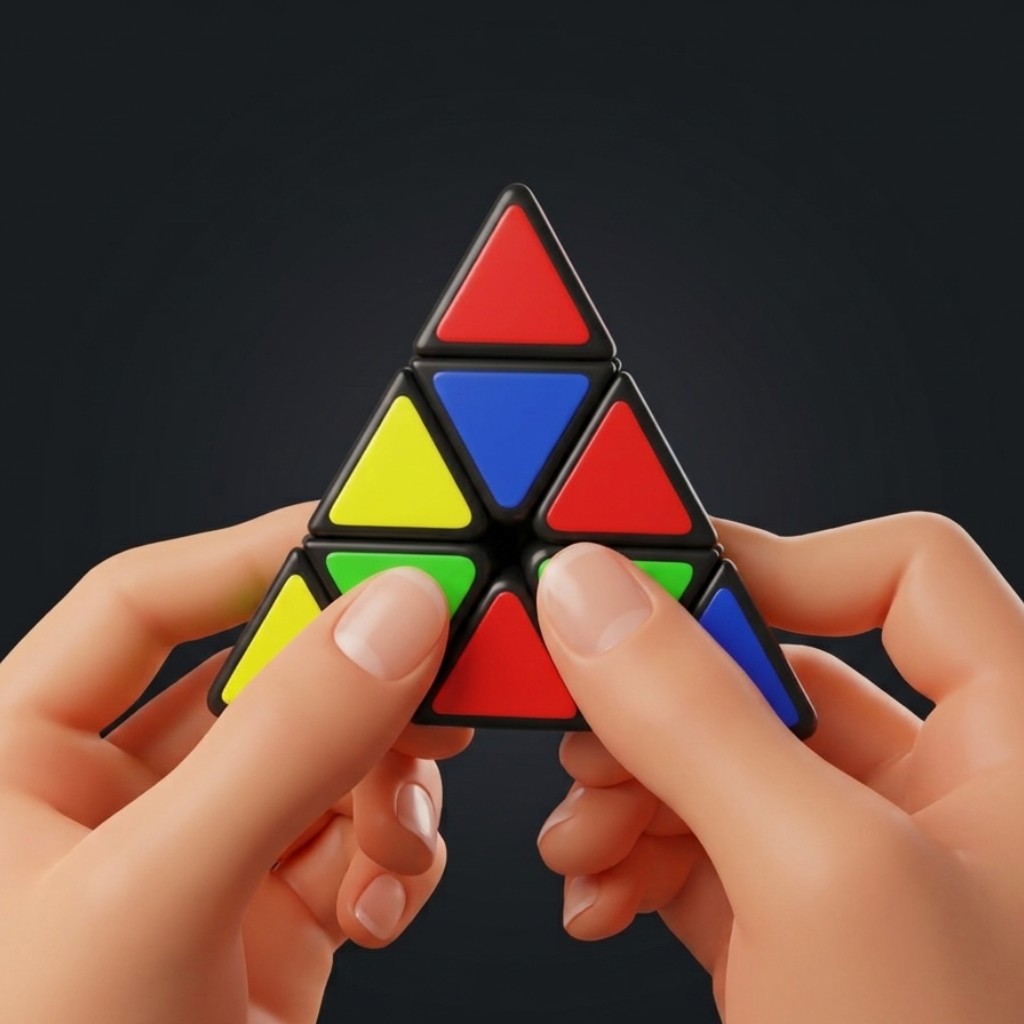
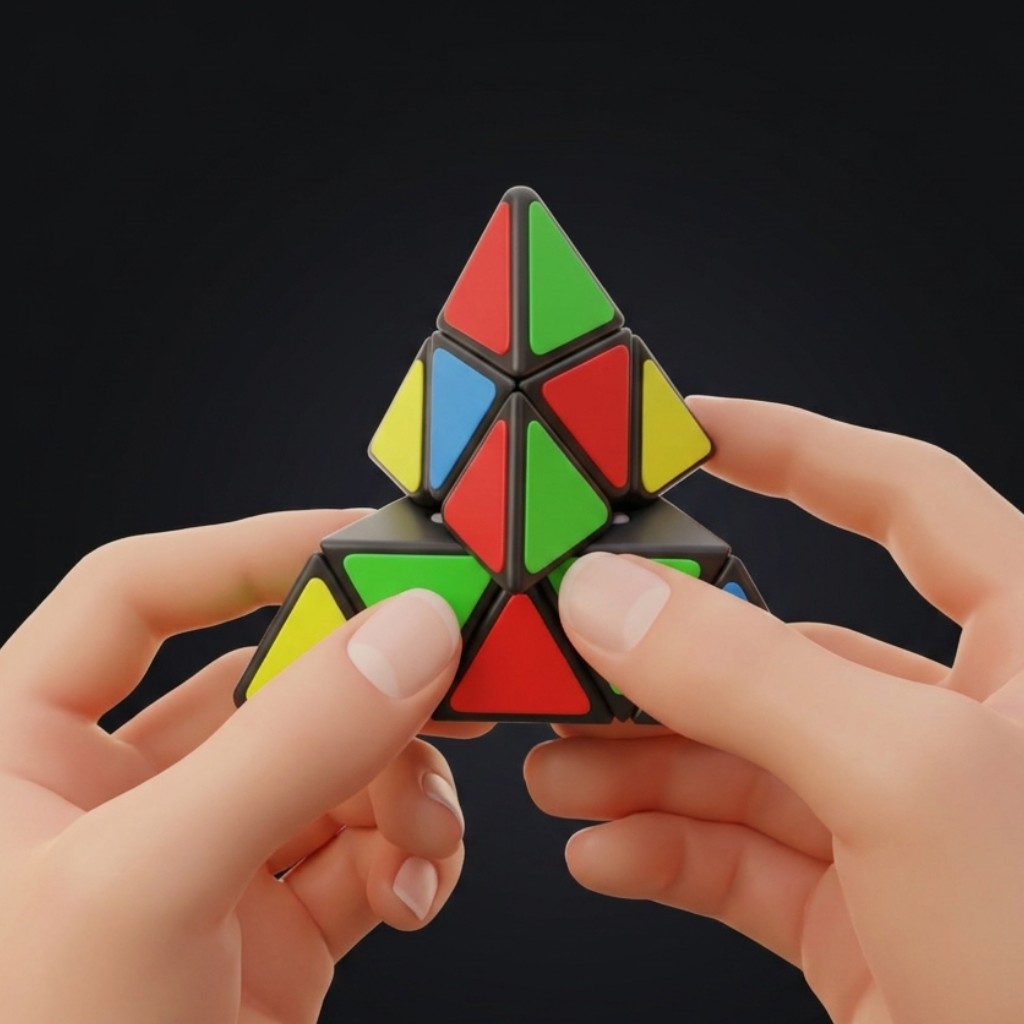
The first puzzle on the site that isn't a cube, and the most rewarding of the lot: you solve it the same day you pick it up. A tetrahedron has 933,120 combinations — against the 3×3's 43 quintillion — and half its pieces go into place without a single formula, just turning by hand. The four corners turn loose and drag nothing with them, the four centres never change places, and all the real work is the six edges.
The other corner-turning puzzle, the Pyraminx's sibling but cube-shaped. Four turning axes, 120° turns, and about three million positions. The eight corners twist in place and the six centres only change place, never orientation. The whole method runs on a single four-move block —the sledgehammer— repeated and aimed with wrist turns.
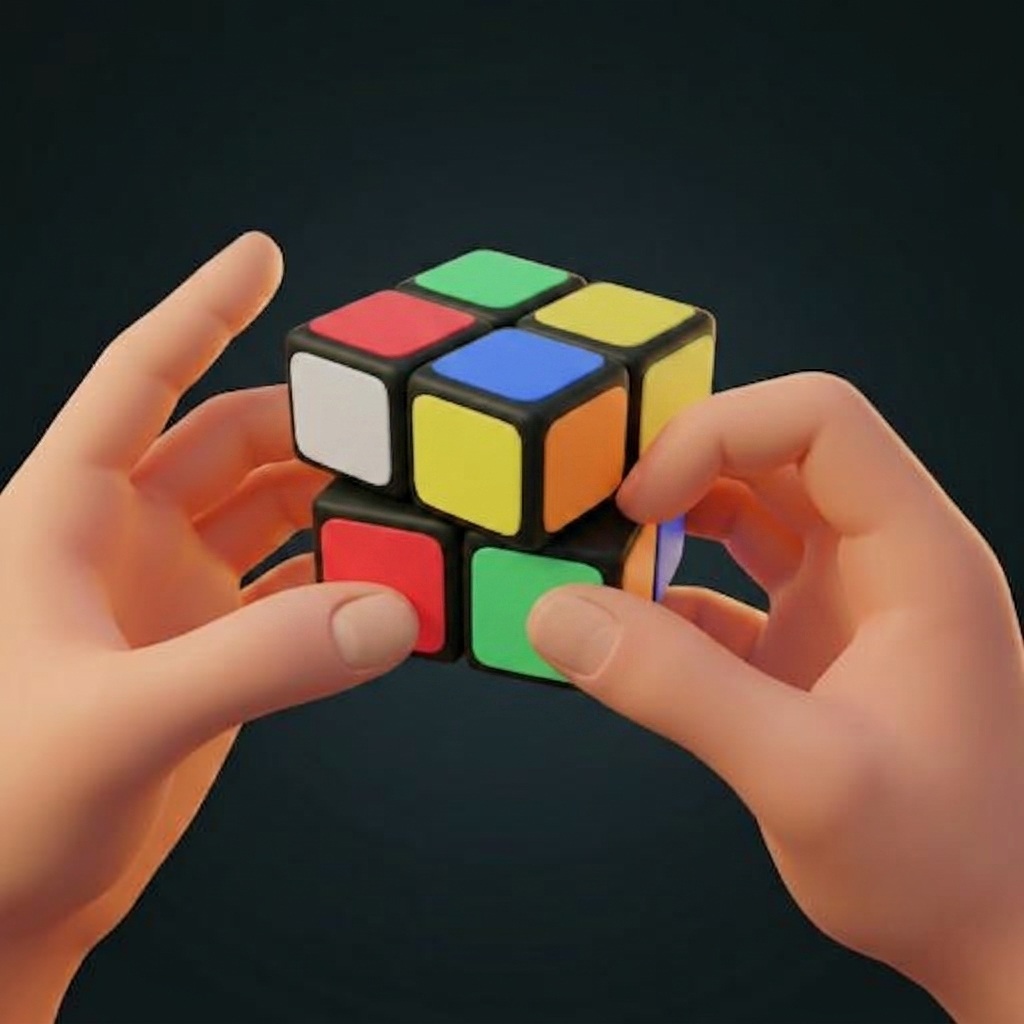
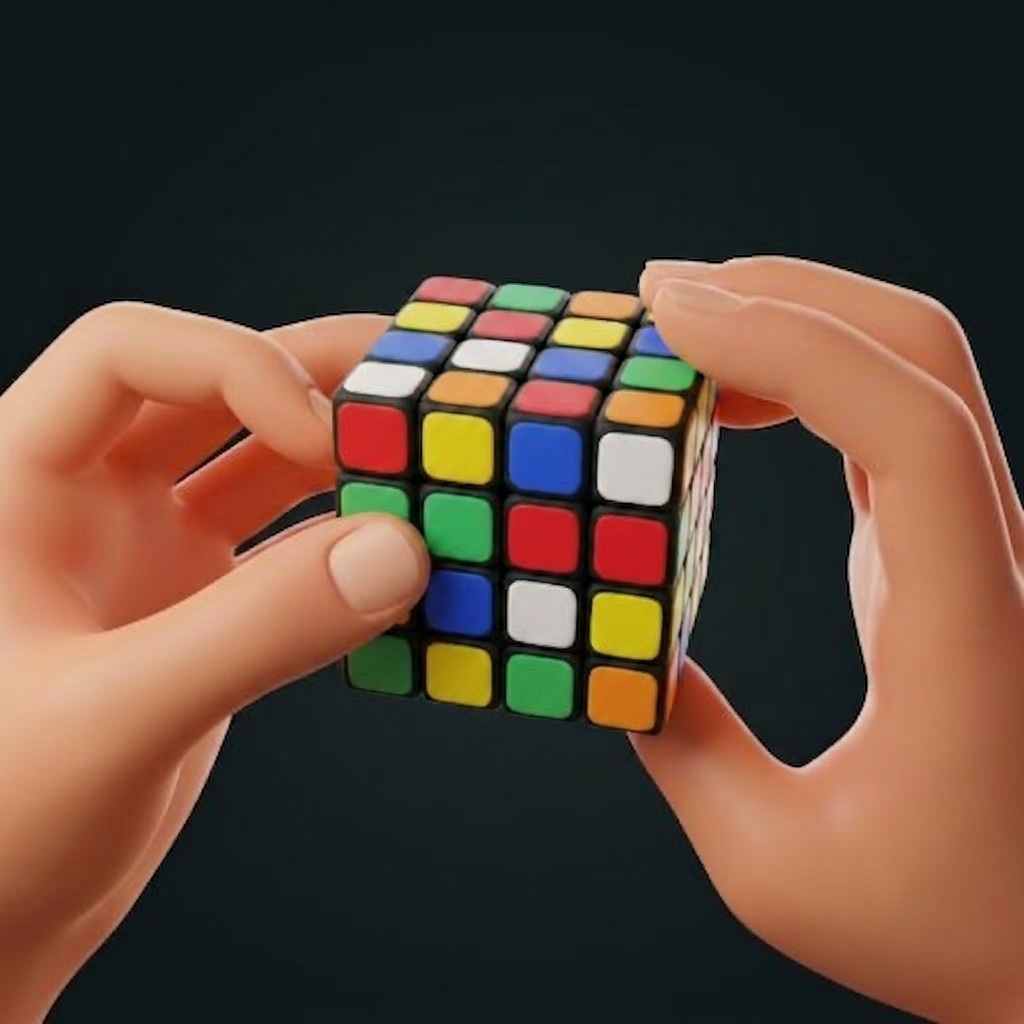
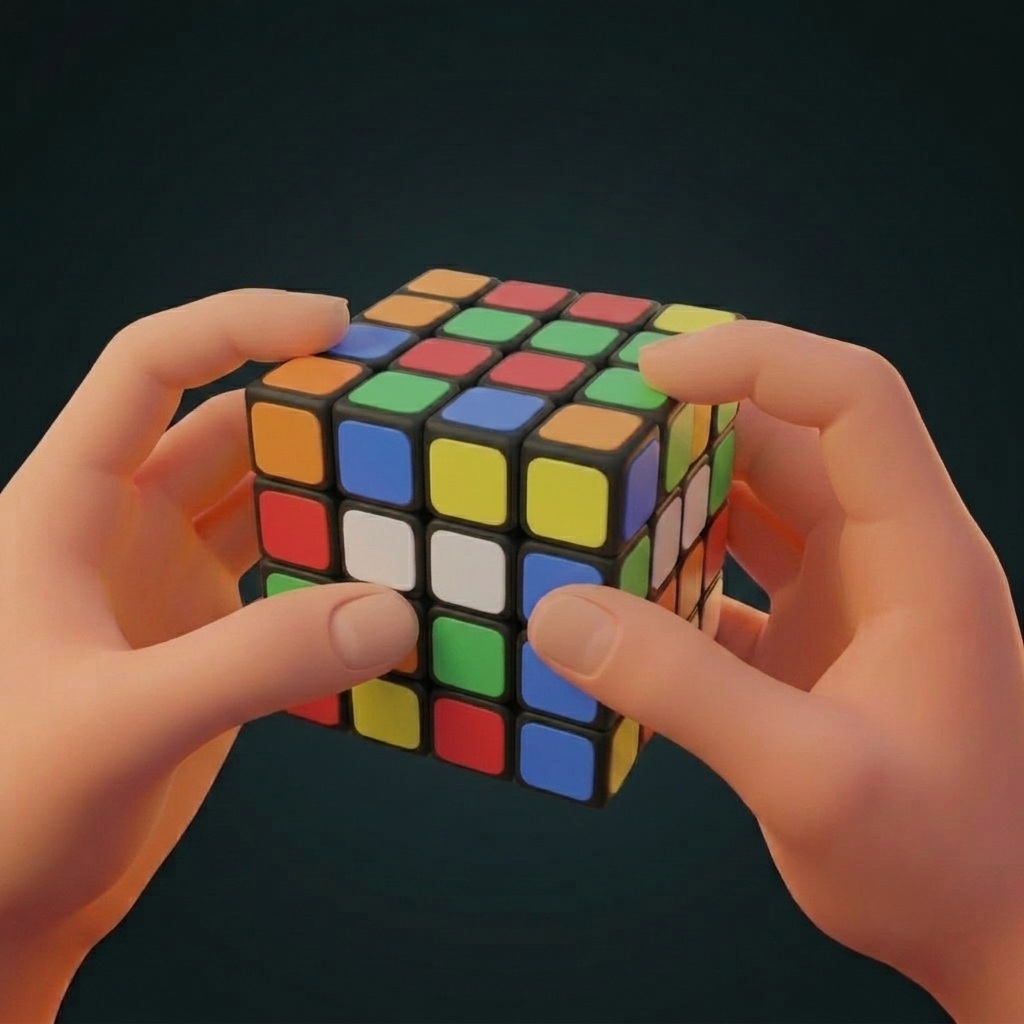
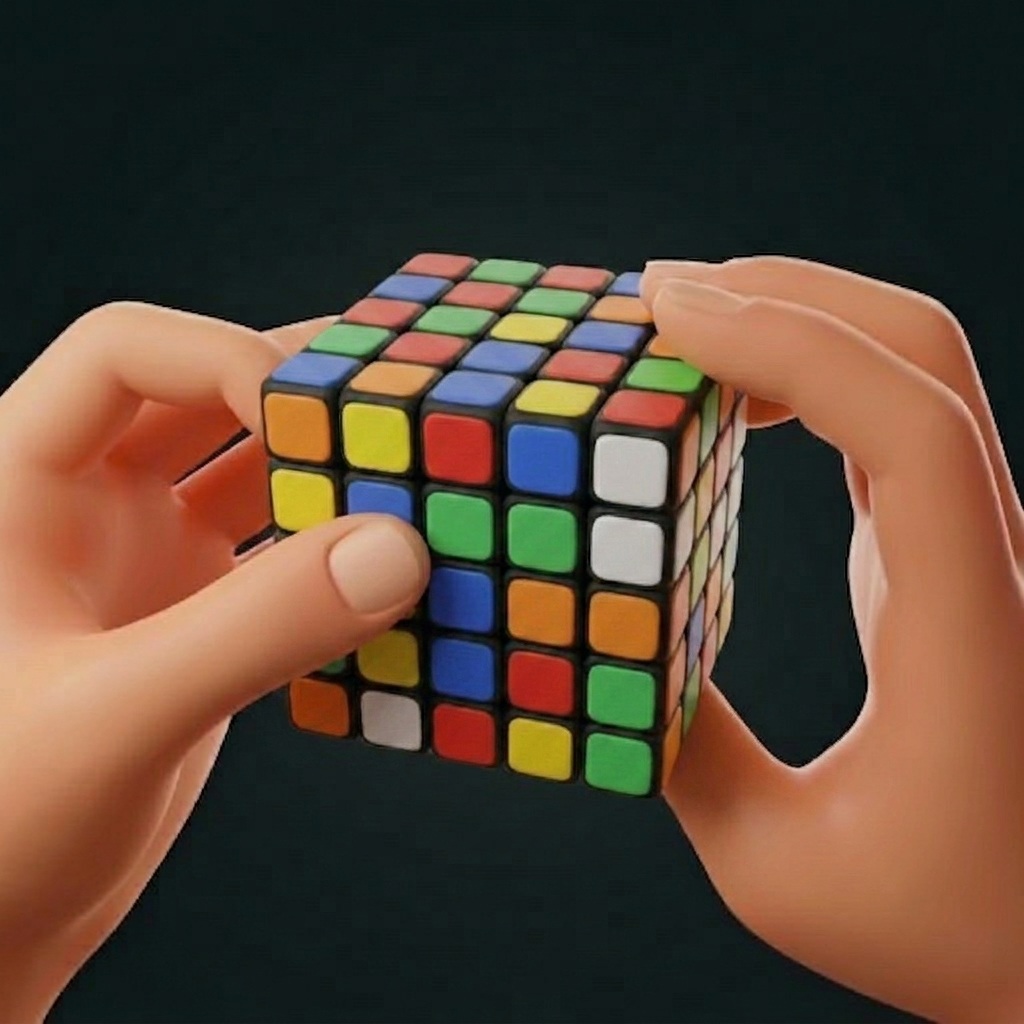
Beginner
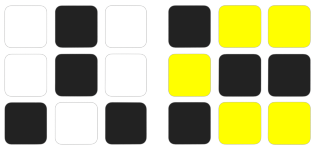
Layer by layer, with very few formulas: white cross, corners, second layer, yellow face and final steps. In a few days you'll solve your first real cube, reasoning with it in your hands, not copying a video.
Intermediate
F2L, OLL and PLL solved in two looks each. Far fewer cases to memorize than full CFOP and almost the same speed: this is the one that gets many people under 30 seconds.
Advanced (Fridrich / CFOP)
Full F2L, OLL and PLL in a single look and formula. More cases to memorize, but no speed ceiling: it's the same method used to break world records.
Beginner
Build the first crown by intuition, with no fixed formula, and solve the last layer with a single tool you already know if you're coming from 3×3: the same Sune to orient the corners and the same cycle to permute them.
Ortega
Solve one full face by intuition, orient the last layer without looking at the sides (OLL), and permute both layers at once (XLL). More formulas than Beginner, but much faster: it's the method that gets you under 5 seconds.
Advanced (CLL)
A single algorithm solves the face and permutes the last layer at once, with no intermediate steps. 42 cases to memorize, but it's the fastest method possible on 2×2.
Reduction
The classic 4×4 method: build the six centers, pair the twelve double edges, and from there solve it like a normal 3×3. It only adds two new cases at the end, the parities.
Yau
The same Reduction with the phases reordered, which is what almost the entire world top uses: you build the 3×3 cross before pairing the edges, and from then on you never undo it. It assumes you already know Reduction.
Is this your first cube? Before choosing a method, check out Notation: in five minutes you'll know what pieces the cube has and how to read any formula on these pages.
Go to Notation →Is this your first 2×2? Before choosing a method, check out 2×2 Notation: in five minutes you'll know how this cube moves (it's a subset of 3×3 notation, so if you already know it you're all set).
Go to 2×2 Notation →Before starting, it helps to know the 4×4 notation: wide moves (Rw) and the inner layer (2R) don't exist on a 3×3, and every formula in this section uses them.
See the 4×4 notation →Reduction
The same method as the 4×4, adapted to a cube with a fixed centre: build the six centres with one tool and its variants (not loose cases to memorise), pair the twelve edges, and solve it like a normal 3×3. Only one new case shows up at the end, parity.
Yau5
The same Reduction with the phases reordered, the one the world's top 5×5 solvers use: you build the two opposite centres and the 3×3 cross before pairing the rest, and from then on you never undo it. It assumes you already know Reduction.
Before starting, it helps to know the 5×5 notation: the wide moves (Rw, 3Rw), the inner layer (2R) and the middle slice (M E S) don't exist the same way on a 3×3, and every formula in this section uses them.
See the 5×5 notation →Layer by layer (LBL)
The same idea as Beginners on the 3×3, applied to the tetrahedron: first the skeleton —centres and corners— with no formula at all, then the bottom crown, and up top only three edges are left, solved with two formulas. Five formulas in the whole method and none longer than eight moves.
Keyhole
It flips the order around: it builds the top tip first, leaving one edge out, and uses that gap as a key to orient the bottom centres without undoing anything. It's the same conceptual jump Ortega made on the 2×2 — it isn't about memorising more, it's about looking at the puzzle differently.
L4E
The method people compete with. You place a V —two bottom edges— and solve the remaining four in one go, with no intermediate steps. That's 36 cases across 19 cards, because half of them come in pairs: each case and its mirror share a card, and the formula is the same with the L's swapped for R's. None of them touches the back vertex.
If this is your first Pyraminx, it's worth starting with its notation: the four axes (U, L, R, B), the 120° turns and the lowercase letter that moves only the tip don't work the way they do on a cube, and every formula in this section uses them.
See the Pyraminx notation →Beginners
A single formula for the whole method. You build the white face by hand —no formula, just turning— and from there you chain the sledgehammer with itself, turning the Skewb between repetitions, until the top corners are oriented, the yellow centre is placed and the remaining centres are finished off.
Intermediate
The same method merging two steps into one: instead of orienting the top corners and then placing the yellow centre, you do them together. Eleven cases, all with the sledgehammer aimed at the top corner —to the right or to the left—, never using the awkward move. What you gain isn't moves, it's stops.
If it's your first Skewb, start with its notation: the four axes (U, L, R, B), the neighbouring corner the sledgehammer needs, and why there's no double turn. Every formula in this section rests on it.
See the Skewb notation →Would you rather have them on paper? There's a printable sheet for each method, with all its algorithms and the same diagrams you see here. Print it or save it as a PDF, free and with no sign-up.
See the sheets →